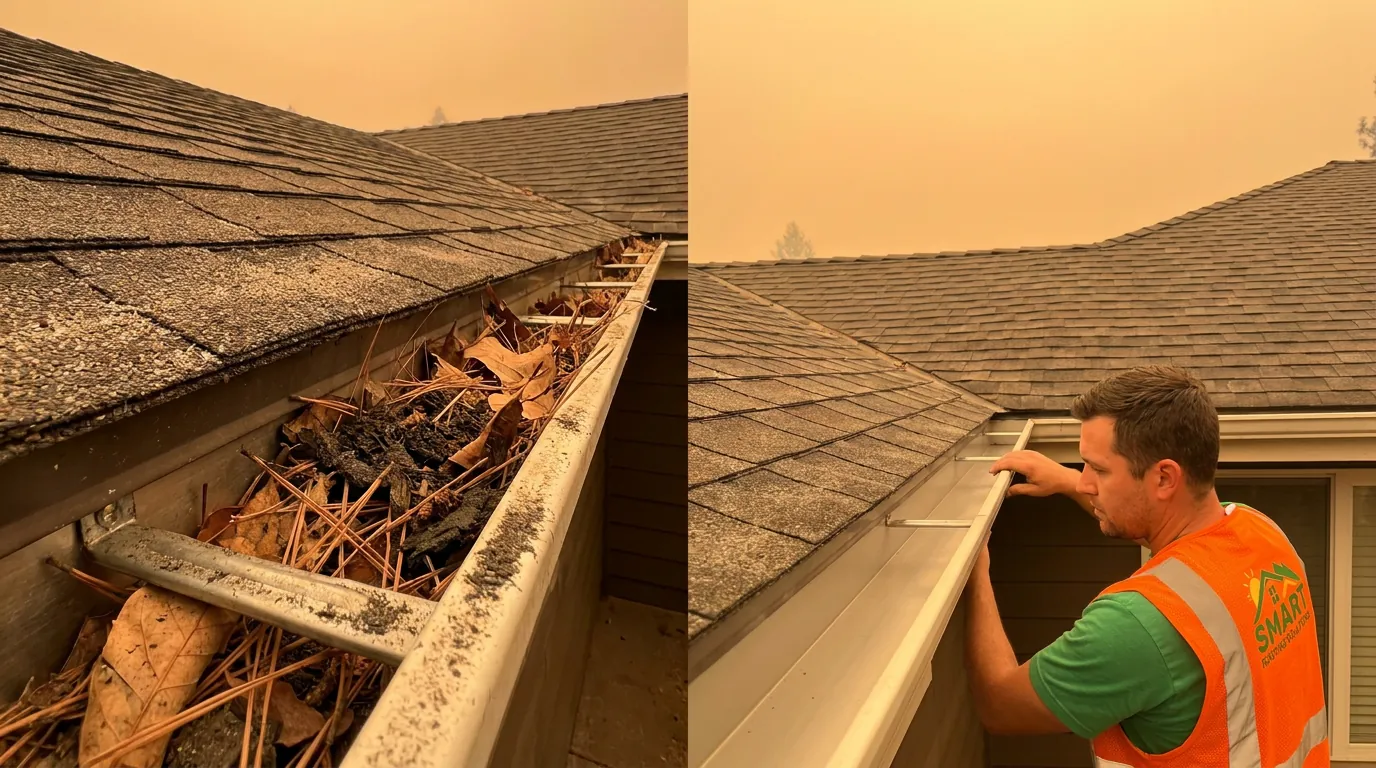
Wildfire season is now a fixture of summer in British Columbia, and its risks reach far beyond the fire lines. The biggest danger to most homes is not a wall of flame but wind-blown embers, which can travel kilometres ahead of a fire and land on roofs, in valleys, and in gutters. If those embers settle on dry debris, they can ignite. A gutter packed with dry leaves and needles sits right at the edge of your roof, and it is exactly the kind of fuel an ember needs. Keeping gutters clean is one of the simplest, most effective things you can do to protect your home during fire season.
How Do Gutters Become a Fire Risk?
It seems counterintuitive that something designed to handle water could be a fire hazard. But by mid-to-late summer, after the dry months, gutters are often full of bone-dry leaves, needles, and twigs. That debris is highly flammable, and its location, at the roof edge, against the fascia, under the eaves, is one of the worst possible places for a fire to start. An ember landing there can smoulder and then ignite the debris, the fascia, and from there the roof structure.
Why Are Embers the Main Threat?
Most homes lost in wildfires are not consumed by the main fire front; they are ignited by embers. These small burning fragments are carried on the wind, often far ahead of the fire itself, and they land by the thousands on and around a home. They do not need to hit flammable siding to do damage; they only need to find a spot of dry fuel. Clean gutters remove one of the most common and accessible spots for an ember to take hold.
Why Is Dry Gutter Debris So Dangerous?
A few factors combine to make gutter debris a serious risk:
- It is dry - by fire season, gutter debris has had months to dry out completely
- It is elevated - a fire that starts in a gutter is already at roof level, where it can spread to the structure
- It is against the building - the gutter sits at the fascia and eaves, right where fire can reach the roof
- It is easy to overlook - out of sight at the roofline, it is the kind of fuel homeowners forget about
How Do You Reduce Your Gutter Fire Risk?
The good news is that this risk is very manageable:
- Clean the gutters before and during fire season so there is no dry fuel to ignite
- Clear the roof too, since debris in valleys and against the chimney is the same hazard
- Consider gutter guards to keep debris from accumulating in the first place
- Choose non-combustible materials where possible, such as metal gutters over vinyl
- Maintain defensible space by clearing dry vegetation near the base of the house
Do Metal Gutters Help in Fire Season?
The gutter material itself matters. Metal gutters, such as aluminum or steel, are non-combustible and will not add fuel to a fire, whereas vinyl gutters can soften, melt, or burn. Metal does not make a debris-filled gutter safe, the dry debris is still the fuel, but a clean metal gutter is the most fire-resistant combination. If you are replacing gutters and fire risk is a concern for your property, metal is the safer choice.
Can Gutter Guards Reduce Ember Risk?
Gutter guards help in two ways. By keeping leaves and needles out, they prevent the dry fuel from accumulating in the first place, which is the core of the risk. And metal mesh guards add a physical barrier that makes it harder for embers to reach whatever small amount of debris does get through. Guards are not a complete solution on their own, and they still need occasional checking, but combined with clean gutters they meaningfully reduce ember ignition risk. Our gutter guards options can be matched to your home and surroundings.
When Should You Clean Before Fire Season?
The ideal timing is to clean as the dry season sets in and again if a heavy smoke or ember event is forecast nearby. Because fire season overlaps with the dry summer, gutters that were cleared in spring will have collected dry debris by July and August. A pre-season gutter cleaning removes that fuel at exactly the right time, and it is far easier to do calmly before a fire threatens than during a smoky, stressful week.
A Pre-Fire-Season Gutter Checklist
As the dry months arrive, a short routine keeps your gutters from becoming fuel:
- Clear all leaves, needles, and twigs from the gutters and downspouts
- Clear debris from the roof valleys and around the chimney as well
- Check that any gutter guards are intact and doing their job
- Trim back branches overhanging the roof and gutters
- Keep dry vegetation clear of the base of the house
Running through this before fire season peaks, rather than during a smoky week, is far less stressful and far more effective.
Roof and Gutters: One Fire-Safety Job
Your roof and gutters share the same ember risk, and protecting one without the other leaves a gap. Embers land on the roof and in the gutters alike, so the two should be cleared together. Our sister company Smart Roofing Solutions covers the roof side of wildfire readiness in detail, and together the roof and gutters make up the front line of your home's defense against wind-blown embers.
Clear the Fuel Before the Embers Arrive
Clean gutters are a small, high-value step in wildfire readiness: they remove dry fuel from one of the most vulnerable spots on your home. Pair clean gutters with a clear roof, consider metal gutters and guards, and you have closed off one of the most common and overlooked paths for ember ignition around a home. To have your gutters cleared before fire season peaks, call us at 778-238-3280 or request a free quote.
Frequently Asked Questions
How can clean gutters reduce wildfire risk?
Why are embers more dangerous than the fire itself?
Are metal gutters safer than vinyl in a wildfire?
Do gutter guards help with fire safety?
When should I clean my gutters for wildfire season?
Need Professional Help?
Contact Smart Gutter Solutions for a free consultation and estimate.