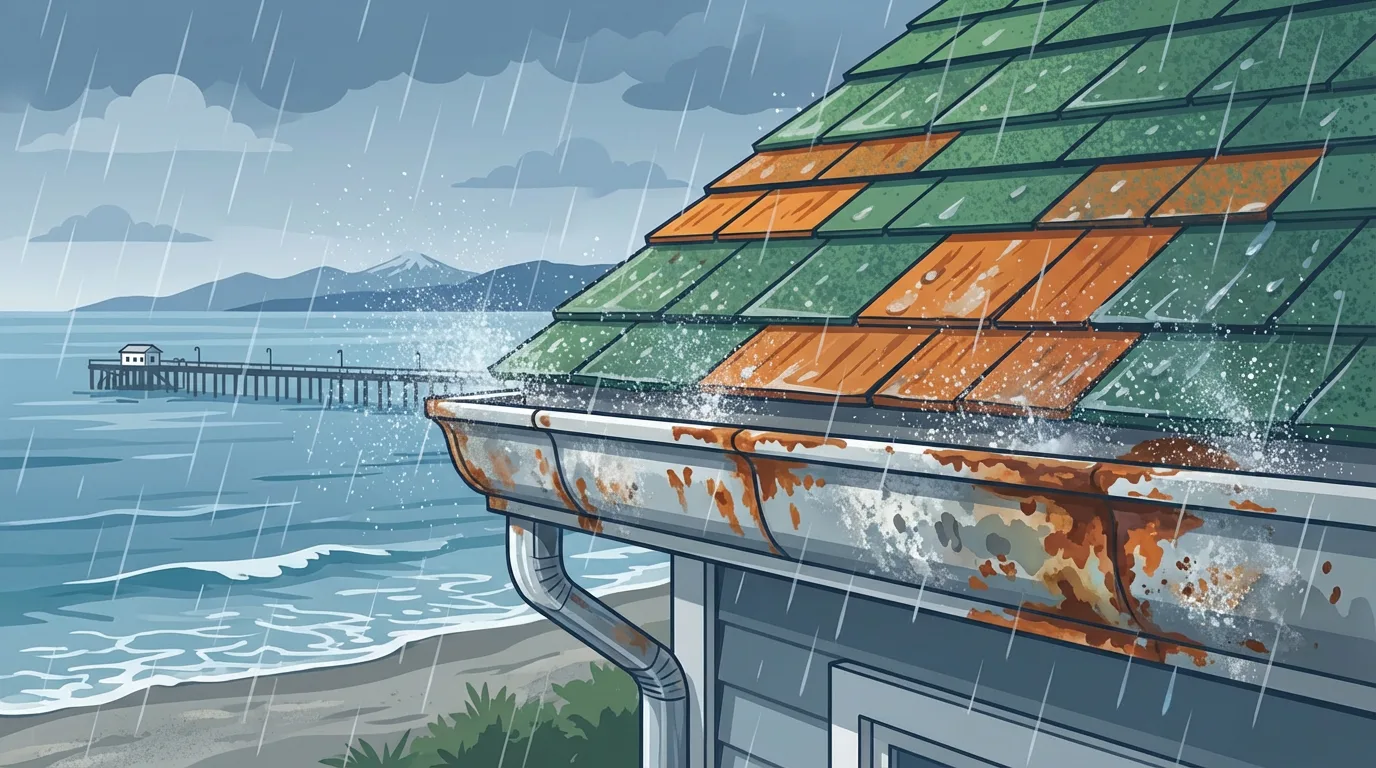
White Rock's oceanfront location is one of its biggest draws. From the waterfront promenade to the hillside homes overlooking Semiahmoo Bay, living near the water is what makes this community special. But that proximity comes with a maintenance challenge that inland homeowners never deal with: salt air corrosion.
Salt-laden air blows off the ocean and settles on every exposed surface of your home, including your gutters. Over time, this accelerates deterioration in ways that standard maintenance schedules don't account for. Here's how it happens, what it looks like, and what you can do to protect your gutter system.
How Salt Air Damages Gutters
The Corrosion Process
Salt air carries microscopic sodium chloride particles that settle on metal surfaces. When combined with moisture - which is constant in White Rock's climate - these salt deposits create an electrolyte solution on the metal surface. This triggers an electrochemical reaction that breaks down the metal at a molecular level.
The process is slow but relentless. Every rain rinses some salt away, but the next onshore breeze deposits more. The cycle never stops, and the cumulative effect shortens your gutter's lifespan significantly compared to identical gutters in an inland location.
Proximity Matters
The closer your home is to the water, the more salt exposure your gutters receive. Homes along Marine Drive, the White Rock waterfront, and the lower hillside neighborhoods get the heaviest salt deposit. Properties further uphill in areas like East White Rock and the Johnston Road corridor still get salt air but at lower concentrations.
The general rule: homes within 500 meters of the ocean experience noticeably faster corrosion. Within 200 meters, the effect is significant.
It's Not Just Rust
When most people think of corrosion, they think of rust on steel. But salt air affects different metals in different ways:
- Steel gutters develop red rust that eats through the metal. Galvanized coatings slow this down but don't prevent it - once the zinc layer is breached, corrosion accelerates rapidly
- Aluminum gutters develop white powdery oxidation (aluminum oxide). While this surface layer actually provides some protection, salt air can cause pitting corrosion that penetrates deeper
- Painted or coated gutters see coating breakdown first - peeling, bubbling, and flaking that exposes bare metal to further attack
- Fasteners and hardware are often the first to fail. Steel screws, hangers, and brackets in a salt environment corrode faster than the gutters themselves
Signs of Salt Air Corrosion on Your Gutters
Walk around your White Rock home and look for:
- White powdery residue on aluminum gutters, especially in areas that don't get rinsed by direct rainfall
- Rust streaks running down from steel hangers, screws, or brackets
- Pitting - small holes or rough texture on the metal surface that wasn't there before
- Paint peeling or bubbling on coated gutters, typically starting at edges and seams
- Green deposits on copper or brass fittings (different from copper patina - salt corrosion is uneven and crusty rather than smooth)
- Staining on siding below gutter hardware where corroded metal is leaving residue in rainwater runoff
If you're seeing these signs, your gutters may need professional assessment and repair before the damage progresses further.
Which Gutter Materials Handle Salt Air Best
Best: Copper
Copper is the gold standard for coastal environments. It doesn't rust, the natural patina that develops actually protects the underlying metal, and it's unaffected by salt air in any meaningful way over its 50-80 year lifespan. The trade-off is cost - copper gutters are the most expensive option. But for White Rock waterfront properties where salt exposure is highest, copper's durability makes it a legitimate long-term investment.
Very Good: Marine-Grade Aluminum
Standard aluminum handles salt air reasonably well, but marine-grade aluminum alloys (like 5052 or 3004) are specifically engineered for coastal environments. They resist pitting corrosion better than standard alloys and maintain their structural integrity longer. When paired with a quality baked-on enamel finish, marine-grade aluminum gutters can last 20-25 years in White Rock's coastal conditions.
Acceptable: Standard Aluminum with Quality Coating
Standard aluminum gutters with a thick factory-applied finish perform adequately in moderate salt exposure - suitable for homes in upper White Rock that are further from the waterfront. The coating acts as a barrier between the salt air and the metal. The key is coating quality - cheap finishes break down faster, exposing the aluminum to accelerated corrosion.
Poor: Steel and Galvanized Steel
Steel gutters - even galvanized ones - are a poor choice for coastal White Rock. The zinc galvanizing layer corrodes in salt air, and once it's gone, the underlying steel rusts aggressively. We regularly replace steel gutters on White Rock homes that are showing serious corrosion after just 10-12 years.
Protecting Your Gutters from Salt Damage
Regular Rinsing
The simplest defense is also the most effective: rinse your gutters with fresh water regularly. This removes salt deposits before they can cause damage. Homes close to the waterfront benefit from a hose rinse every few weeks during the drier months when rain isn't naturally washing the salt away.
Consistent Cleaning
Regular gutter cleaning does more than remove debris. A professional cleaning includes inspection of the metal surface, hardware condition, and coating integrity. Catching early corrosion signs during routine maintenance lets you address problems before they become expensive.
Use Compatible Hardware
One of the most common corrosion accelerators in coastal homes is mismatched metals. Steel screws in aluminum gutters, or aluminum brackets on copper systems, create galvanic corrosion that salt air makes worse. Every fastener, hanger, and connector should be compatible with your gutter material.
When we install or repair gutters in White Rock, we use hardware that matches the gutter material - aluminum fasteners for aluminum gutters, copper or brass for copper systems, and stainless steel where a stronger fastener is needed.
Protective Coatings
For existing aluminum gutters, applying a marine-grade sealant or wax coating adds a protective barrier against salt. This isn't a permanent solution - it needs reapplication every 2-3 years - but it's a cost-effective way to extend the life of gutters that are still in good condition.
Inspect More Frequently
Inland homes can get by with twice-yearly gutter inspections. Coastal White Rock homes should be inspected at least three times per year, with extra attention to hardware and fasteners. Catching a corroded hanger before it fails prevents a gutter section from pulling away and causing further damage.
When to Replace vs Repair
If salt corrosion has caused isolated damage - a few pitted spots, some corroded fasteners, or a short section with coating failure - repair is usually sufficient. Replace the affected hardware with marine-compatible fasteners, patch or seal the damaged area, and apply protective coating.
If corrosion is widespread - pitting across multiple sections, structural weakness in the metal, or coating failure system-wide - replacement with a more corrosion-resistant material is the better investment. Upgrading to marine-grade aluminum or copper during a full replacement solves the problem for decades rather than years.
Don't Forget the Roof
Salt air doesn't stop at your gutters. It affects roofing materials, flashing, and fasteners too. Metal flashing around vents and chimneys is particularly vulnerable. If your gutters are showing salt corrosion, your roof hardware likely is too. Our sister company Smart Roofing Solutions can inspect your roof for salt-related deterioration alongside our gutter assessment.
Living Well on the Coast
Salt air corrosion is a reality of coastal living in White Rock, but it's manageable with the right materials, regular maintenance, and timely intervention. If your gutters are showing signs of corrosion or you're planning new installation, call us at 778-238-3280 or request a free quote. We'll recommend the right materials and maintenance plan for your specific location and salt exposure level.
Frequently Asked Questions
How much faster do gutters corrode near the ocean?
What is the best gutter material for oceanfront homes?
Can I prevent salt corrosion on existing gutters?
How often should coastal gutters be inspected?
Should I replace steel gutters on my White Rock home?
Need Professional Help?
Contact Smart Gutter Solutions for a free consultation and estimate.