Delta sits on flat, low-lying terrain - much of it reclaimed farmland. That geography creates a unique drainage challenge for homeowners. Unlike hillside communities where water naturally runs downhill, Delta properties often deal with slow drainage, high water tables, and soil that holds moisture longer than it should.
Your downspouts are the last line of defense between your roof's runoff and your foundation. When they're not working properly, that water has nowhere to go except into the ground right next to your home. Here are the most common downspout problems we see in Delta and how to fix each one.
1. Downspouts Dumping Water Too Close to the Foundation
This is the most common issue, and it's surprisingly easy to overlook. Many Delta homes have downspouts that end right at the base of the wall, depositing all the roof runoff within inches of the foundation.
On Delta's flat terrain, that water doesn't flow away on its own. It soaks into the soil and sits against the foundation wall, which can lead to:
- Basement moisture and dampness
- Foundation cracking over time
- Mold growth in crawl spaces
- Soil erosion that undermines walkways and patios
The fix: Downspout extensions that direct water at least 4-6 feet from the foundation. In areas like Ladner and Tsawwassen where properties sit on particularly flat ground, longer extensions or underground drain pipes may be needed to get water far enough away. Our downspout services include extension installation and underground drainage solutions.
2. Clogged Downspouts
When leaves, needles, and sediment wash down from your gutters, they can accumulate inside the downspout - especially at bends and elbows. A clogged downspout creates a bottleneck that backs water up into the gutters, causing overflow at the roofline.
You might have a clogged downspout if:
- Gutters overflow during rain even though they look clean from above
- Little or no water comes out the bottom during a storm
- You hear water gurgling inside the downspout
- Water is leaking from seams or joints in the downspout itself
The fix: Flush downspouts with a garden hose from the top. If the clog doesn't clear, a plumber's snake or professional cleaning is the next step. For chronic clogging, wider downspouts (3x4 inch instead of 2x3 inch) handle debris better. Regular gutter cleaning that includes downspout flushing prevents most clogs from forming.
3. Underground Drain Pipes That Are Blocked
Some Delta homes have downspouts connected to underground drain pipes that carry water to the street, a ditch, or a storm drain. These buried pipes can become blocked by root intrusion, soil collapse, or accumulated sediment over years.
This is a particularly common issue in North Delta and Sunshine Hills, where older homes may have original drainage systems that haven't been serviced in decades.
Signs of a blocked underground drain:
- Water backing up and surfacing around the downspout base
- Soggy patches in the lawn along the buried pipe's path
- Gutters overflowing despite clean downspouts
- Standing water near the foundation after rain stops
The fix: A drain camera inspection can identify the blockage location. In some cases, the pipe can be cleared with a hydro jet. If the pipe is collapsed or badly damaged by roots, replacement may be necessary. When underground drains aren't practical to repair, redirecting downspouts above ground with extensions is a reliable alternative.
4. Insufficient Number of Downspouts
Each downspout can only handle so much water. The general guideline is one downspout for every 30-40 linear feet of gutter. If your gutter runs are longer than that with a single downspout, water builds up faster than it can drain, especially during heavy storms.
Delta gets over 1,000 mm of rain annually, and much of it falls in concentrated bursts from October through March. An undersized drainage system that seems fine during light rain can fail dramatically during a heavy downpour.
The fix: Adding additional downspout outlets to long gutter runs. This is a straightforward job that involves cutting an outlet hole in the gutter, connecting a new downspout, and directing it away from the foundation. The difference in water handling capacity is immediate.
5. Downspouts Draining Toward Neighboring Properties
In Delta's tighter neighborhood layouts - particularly in newer developments in East Ladner and Tsawwassen - downspouts sometimes direct water toward a neighbor's property or a shared fence line. This causes disputes and can violate municipal drainage bylaws.
The fix: Redirect downspout extensions or install underground drainage that routes water toward your own property's drainage system or the street. Being thoughtful about where water goes maintains good neighbor relations and keeps you compliant with local regulations.
6. Disconnected or Damaged Downspouts
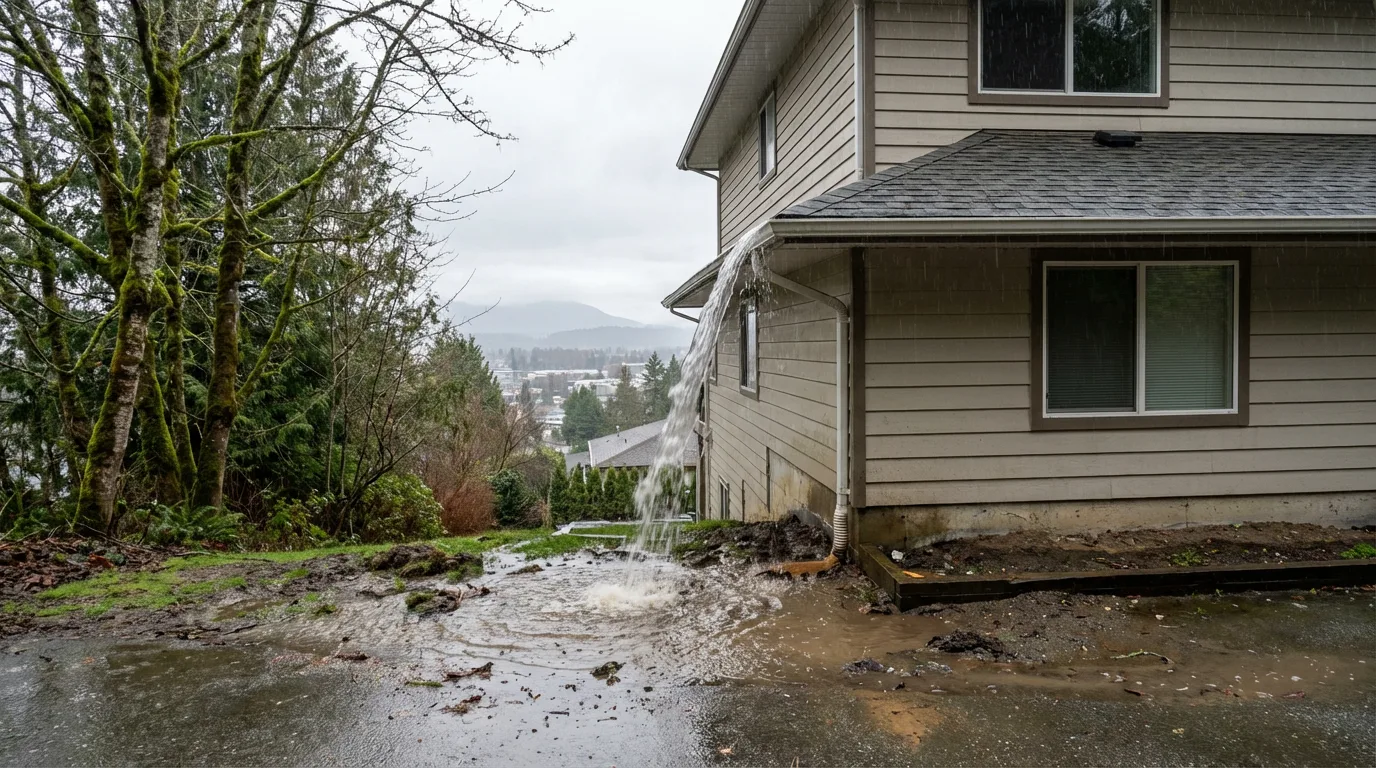
Winter storms, ice, and even lawn equipment can knock downspout sections loose or damage them. A disconnected downspout section means water pours out mid-wall instead of reaching the ground, causing siding damage and creating erosion directly below the gap.
The fix: Reconnect loose sections and replace damaged ones. Check all downspout connections each spring as part of your regular gutter maintenance. If sections are repeatedly coming loose, the hangers may need upgrading.
7. Poor Grading Around the Foundation
Even with properly extended downspouts, water can flow back toward your foundation if the ground slopes the wrong way. Delta's flat terrain makes this especially common - there's very little natural grade to work with on many properties.
The fix: The ground should slope away from your foundation at a minimum of 1 inch per foot for the first 6 feet. If re-grading the soil isn't enough, a French drain or catch basin system can manage water below the surface. This is a landscaping and drainage issue, but it directly affects how well your downspouts protect your home.
When Downspout Problems Become Foundation Problems
In Delta's soil conditions, foundation damage from poor drainage develops gradually. By the time you notice cracks in your basement walls or persistent dampness, the water has been working against your foundation for years. Fixing the drainage problem is always cheaper than fixing the foundation.
If you're also noticing issues at the roofline - damaged shingles, moss growth, or poor ventilation - your roof may be contributing to the problem. Our sister company Smart Roofing Solutions can assess your roof's condition to make sure the full system from roof to ground is working properly.
Get Your Downspouts Working Right
If you're dealing with pooling water, soggy soil near your foundation, or downspouts that aren't doing their job, we can help. Our downspout services in Delta cover everything from simple extensions to full drainage rerouting. Call us at 778-238-3280 or request a free quote.
Frequently Asked Questions
How far should downspouts extend from my foundation?
How do I know if my underground drain pipe is blocked?
How many downspouts does my home need?
Can downspout problems cause basement flooding?
What size downspouts are best for Delta homes?
Need Professional Help?
Contact Smart Gutter Solutions for a free consultation and estimate.