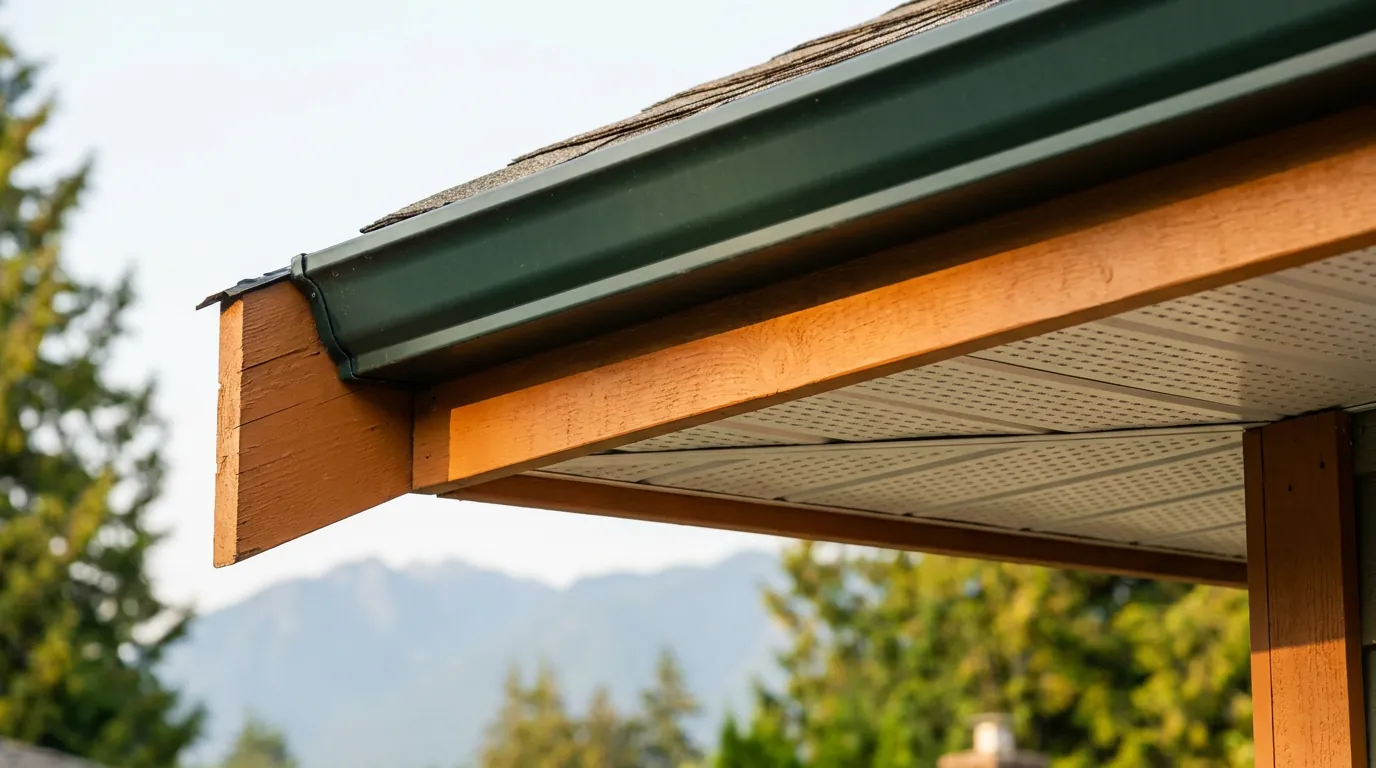
When people think about their gutters, they picture the metal trough catching the rain. But that trough is fastened to, and protected by, two parts most homeowners could not name: the fascia and the soffit. These unglamorous boards do quiet, essential work, and when they fail, the gutters fail with them. For Burnaby homes facing months of wet weather, keeping the fascia and soffit healthy is a key part of keeping the whole roofline sound.
What Are Fascia and Soffit?
They are two connected parts of your roofline, each with a distinct role:
| Part | Where it is | What it does |
|---|---|---|
| Fascia | The vertical board along the roof edge | Caps the roof edge and holds the gutters |
| Soffit | The underside of the roof overhang | Closes off the eaves and vents the attic |
Together they finish the roofline, support the gutters, and help control airflow and moisture at the edge of the roof.
What Does the Fascia Do?
The fascia is the board that runs horizontally along the lower edge of the roof, where the gutters attach. It does two main jobs:
- Holds the gutters - every hanger and bracket fastens into the fascia, so it bears the weight of the gutters and the water they carry
- Seals the roof edge - it closes the gap between the roof and the wall, keeping water and pests out of the structure
Because the gutters hang from it, the fascia is the single most important support in the whole system.
What Does the Soffit Do?
The soffit is the panelled underside of the overhang, the part you see when you stand under the eaves and look up. It also does double duty:
- Closes off the eaves so animals, birds, and moisture cannot get into the roof structure
- Ventilates the attic - most soffits have vents that let fresh air into the attic, which is essential for controlling heat and moisture
A blocked or damaged soffit affects attic ventilation, which can lead to moisture problems well beyond the roofline.
How Do Gutters and Fascia Work Together?
This is the relationship that matters most. The gutters cannot function without sound fascia behind them:
- The gutters catch the water and hang from the fascia
- If the gutters overflow repeatedly, the water runs down and soaks the fascia
- Saturated fascia rots and softens
- Rotten fascia loses its grip on the gutter hangers
- The gutters sag or pull away, which causes more overflow, and the cycle accelerates
In other words, a gutter problem becomes a fascia problem, and a fascia problem becomes a worse gutter problem.
What Are the Signs of Fascia or Soffit Damage?
Look for these around your roofline:
- Peeling paint or visible water stains on the fascia board
- Soft, spongy, or crumbling wood along the roof edge
- Gutters that sag or pull away from the house
- Stained, sagging, or holed soffit panels
- Signs of pests or nesting in the eaves
What Causes Fascia and Soffit Damage?
Most damage traces back to water and the problems that let it linger:
- Overflowing gutters that soak the fascia over time
- Clogged gutters that hold water against the boards
- Poor attic ventilation that traps moisture behind the soffit
- Pests that exploit a small gap and widen it
The common thread is moisture, which is why clear, working gutters are the best protection for the fascia and soffit.
How Do You Protect Your Fascia and Soffit?
Keeping these parts healthy is mostly about managing water and catching problems early:
- Keep gutters clear so they never overflow onto the fascia; routine gutter cleaning is the front line of defense
- Fix overflow and sagging promptly before water has time to rot the boards
- Keep soffit vents clear so the attic breathes and stays dry
- Address damage early - a small area of soft fascia is a quick fix, while widespread rot is a much bigger job
If the fascia is already failing, a gutter repair that includes resecuring or replacing the affected section restores the support your gutters need. When gutters are being replaced, it is also the ideal time to confirm the fascia behind them is sound during a gutter installation.
How Often Should You Check Fascia and Soffit?
A quick look once or twice a year, ideally when you clean the gutters, is enough for most homes. Pay extra attention in two situations:
- In the fall, when wet weather arrives and any weakness shows fastest
- After a windstorm, which can loosen a soffit panel or pull at a gutter section
Between checks, watch from the ground for the warning signs; peeling paint or a sagging gutter is easy to spot without a ladder.
Should You Repair or Replace Damaged Fascia?
It depends on how far the damage has gone:
- Repair works when only a small section is soft, or the paint is failing but the wood underneath is still sound
- Replace when rot has spread along the board or the fascia can no longer hold the gutters securely
Because the gutters depend on the fascia, it is worth addressing sooner rather than later. A small repair now prevents a much larger fascia-and-gutter job later, and a professional can assess which is needed and handle the gutter side at the same time.
Don't Overlook the Hidden Parts
The fascia and soffit do not get much attention, but they hold your gutters up and keep your roofline sealed and ventilated. Keeping your gutters clear is the simplest way to protect them, and catching damage early keeps a small repair from becoming a major one that involves the roofline as well as the gutters. Healthy fascia and soffit are what let your gutters do their job year after year. If your fascia or gutters are showing signs of trouble, call us at 778-238-3280 or request a free quote.
Frequently Asked Questions
What is the difference between fascia and soffit?
Why is the fascia important for my gutters?
What causes fascia and soffit to rot?
What are the signs of fascia or soffit damage?
How do I protect my fascia and soffit?
Need Professional Help?
Contact Smart Gutter Solutions for a free consultation and estimate.