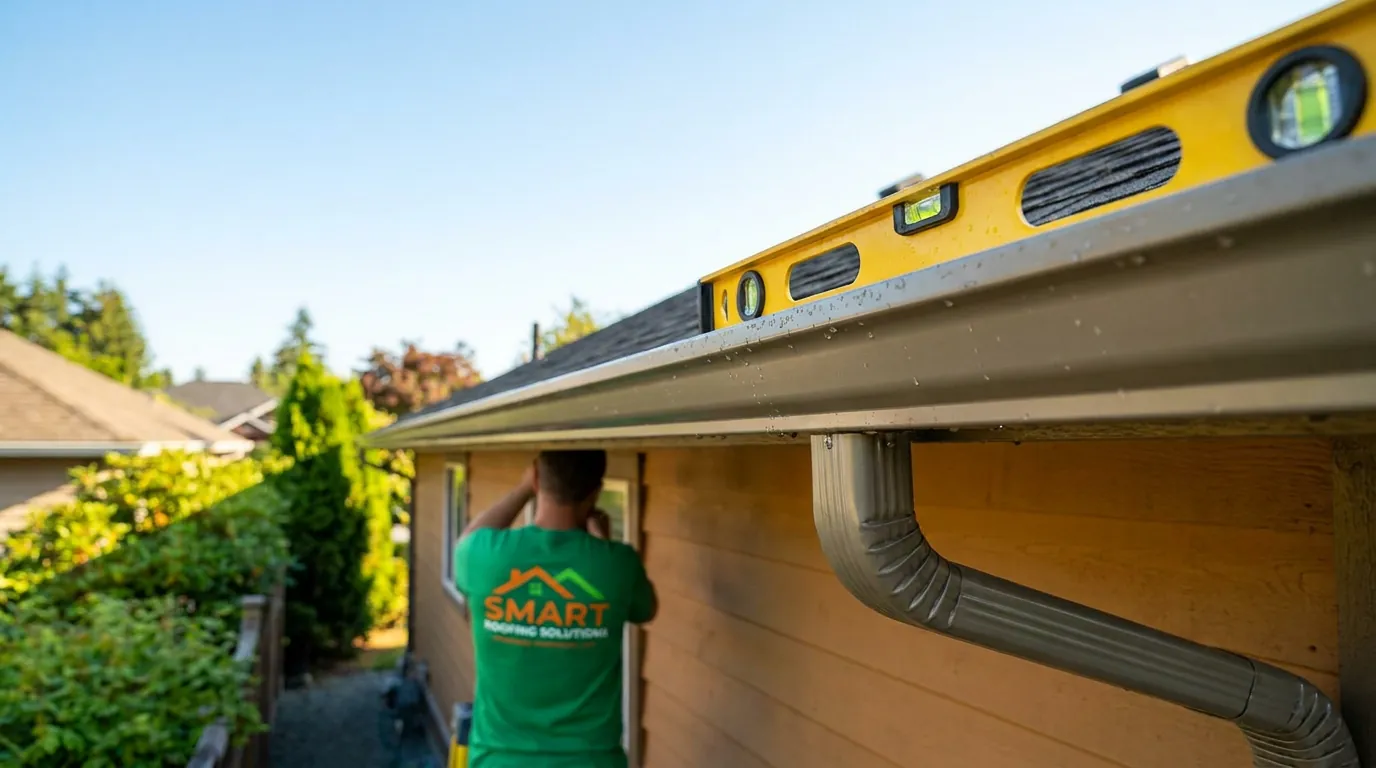
A gutter looks like it should be level, running straight along the roofline. In reality, a gutter that is perfectly level does not work. Gutters rely on a slight, deliberate slope, called the pitch, to move water toward the downspouts. Get the pitch right and water flows away cleanly. Get it wrong, or lose it over time, and water sits, overflows, and starts causing the very damage the gutters are meant to prevent. For Langley homes facing a long wet season, proper slope is quietly essential.
Why Do Gutters Need a Slope?
Gutters drain by gravity. Without a downhill path toward the downspout, water has no reason to move; it simply pools wherever it lands. The slope creates that path, guiding every drop along the channel to the outlet and down the downspout. A gutter with the right pitch empties itself during and after rain. A flat or backward-sloped gutter holds water, and standing water is the start of most gutter problems.
How Much Slope Do Gutters Need?
The pitch is subtle, by design. The general guideline is about a quarter inch of drop for every 10 feet of gutter run, sloping toward the downspout. On long runs, the gutter may slope from a high point in the middle down toward downspouts at each end. It is enough to move water reliably but slight enough that the gutter still looks level to the eye. Too little slope and water lingers; too much and the gutter looks visibly crooked and water can race past the outlet.
What Happens When the Slope Is Wrong?
An incorrect pitch causes a familiar set of problems:
- Standing water that does not drain, adding weight and breeding stagnation
- Overflow as pooled water rises above the gutter edge in heavy rain
- Sagging as the weight of trapped water pulls the gutter down further
- Premature wear as constant standing water corrodes and degrades the gutter
- Fascia damage from water spilling over and soaking the boards behind
What Are the Signs Your Gutters Have Lost Their Slope?
You can often spot a pitch problem from the ground:
- Water visibly pooling in sections of the gutter after rain stops
- Overflow happening in one spot rather than along the whole run
- A gutter line that dips or sags in the middle
- Staining or streaks on the fascia below a particular section
- Standing water and debris collecting in the same low spot repeatedly
What Causes Gutters to Lose Their Pitch?
Gutters that were installed correctly can lose their slope over time. The usual culprits:
- Loose or failed hangers that let a section drop
- The weight of debris and standing water pulling the gutter down
- House settling that shifts the fascia slightly over the years, especially on older homes
- Poor original installation that never set the right pitch to begin with
- Too few hangers, leaving long unsupported spans that sag between supports
In Langley's tree-heavy areas, debris weight is a common cause; a gutter packed with wet leaves sags, and once it sags, the slope is lost and the problem compounds.
Can You Fix Gutter Slope?
Yes, in most cases. Re-pitching a gutter involves resecuring or repositioning the hangers to restore the correct downward angle toward the downspout. If the hangers have failed or are too far apart, adding or upgrading them solves both the slope and the sagging. Where a gutter is old, corroded from years of standing water, or sagging badly, replacement may be the better option. A gutter repair assessment determines whether re-pitching or replacement makes more sense.
How Is Gutter Slope Measured and Set?
Setting the pitch is precise work. An installer establishes the high point and the downspout end, then uses a level and measured marks along the fascia to position each hanger slightly lower than the last, creating the gentle, consistent drop. The hangers are then fastened to hold that line. Because the slope is so subtle, small errors matter: a hanger set a little too high creates a low spot where water will pool, which is why careful measurement beats eyeballing it.
Does Gutter Length Affect the Slope?
Yes. The longer the run, the more total drop it needs, and very long runs can become impractical to slope in one direction without the low end sitting too far below the high end. The common solution is to slope a long gutter from a high point in the middle down to a downspout at each end, halving the distance each way. This keeps the drop reasonable and ensures water always has a short, downhill path to an outlet rather than a long, slow crawl that invites pooling.
Why Proper Slope Matters in Langley
Langley sees the same long, wet season as the rest of the region, and gutters here move a great deal of water. A gutter that cannot drain because of poor pitch will overflow repeatedly through the fall and winter, soaking fascia and pooling at the foundation exactly when the ground is already saturated. Getting the slope right, whether on a new system or by correcting an old one, is what lets the gutters keep up when the rain is relentless. Keeping them clear with routine gutter cleaning protects the slope by preventing the debris weight that causes sagging.
Get the Pitch Right
Slope is one of those details that is invisible when it is right and obvious when it is wrong. If your gutters pool, overflow in one spot, or sag in the middle, the pitch is likely the problem, and it is usually fixable without replacing the whole system. Catching it early, before standing water has corroded the gutter or rotted the fascia, keeps the fix simple. A correctly sloped system installed from the start, through a proper gutter installation, avoids the issue altogether. To have your gutters checked or re-pitched, call us at 778-238-3280 or request a free quote.
Frequently Asked Questions
Why do gutters need to be sloped?
How much slope should gutters have?
What happens if my gutters are not sloped correctly?
How do I know if my gutters have lost their slope?
Can gutter slope be fixed?
Need Professional Help?
Contact Smart Gutter Solutions for a free consultation and estimate.