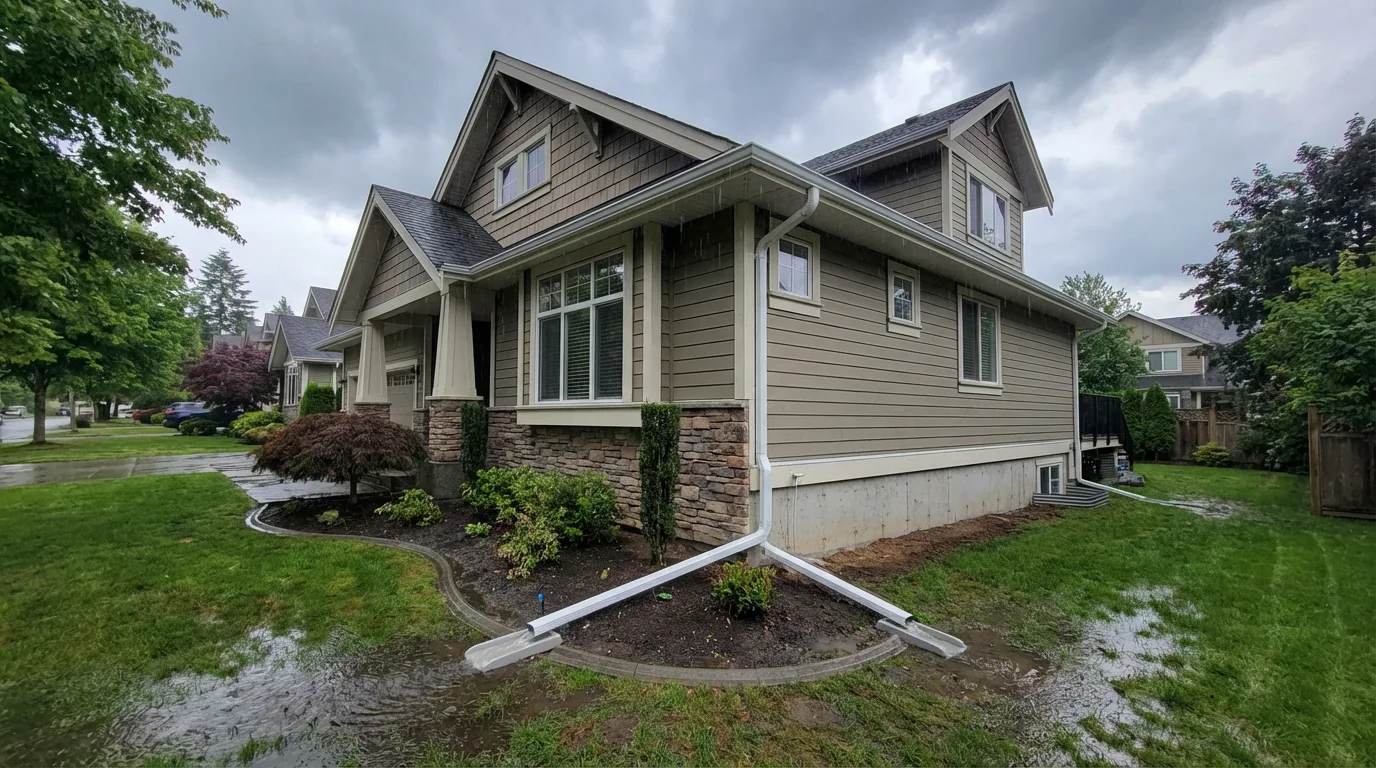
Richmond is built on a river delta. The entire city sits on flat, low-lying land with a water table that's often just a few feet below the surface. That geography makes foundation protection more important here than almost anywhere else in the Lower Mainland - and your rain gutters are the first line of defense.
When gutters work properly, they collect roof runoff and direct it away from the building. When they don't, that water goes straight into the ground next to your foundation. In Richmond's soil conditions, the consequences add up faster than most homeowners realize.
Why Richmond Foundations Are Vulnerable
High Water Table
Richmond's water table sits close to the surface year-round and rises further during the rainy season. The soil around your foundation is already holding significant moisture. When roof runoff is added on top of that - from gutters that overflow, leak, or dump water too close to the house - the soil becomes oversaturated.
Oversaturated soil creates hydrostatic pressure against your foundation walls. This pressure can:
- Force water through hairline cracks in concrete
- Push moisture through basement walls even without visible cracks
- Cause lateral pressure that leads to wall bowing over time
Silt and Clay Soils
Richmond's soil is predominantly silt and clay from centuries of river deposits. These soil types hold water rather than draining it. Once the soil next to your foundation is wet, it stays wet for a long time. In neighborhoods like Steveston, Ironwood, and Broadmoor, this slow-draining soil means every gallon of roof runoff that hits the ground near your house sits there.
Flat Terrain
Unlike hillside communities where gravity moves water downhill and away from buildings, Richmond's flat ground means water has no natural path away from your foundation. It pools wherever it lands. Without proper gutter drainage directing water to a specific discharge point, you're relying on the soil to absorb it - and in Richmond, the soil is often already at capacity.
How Your Gutter System Protects Your Foundation
Collecting Roof Runoff
A typical Richmond home with a 2,000 square foot roof collects approximately 1,200 gallons of water from just one inch of rain. Richmond averages about 1,100 mm (43 inches) of rain per year. That's roughly 50,000 gallons of water hitting your roof annually.
Without gutters, all of that water sheets off the roof edge and falls directly into the soil around your foundation perimeter. With properly functioning gutters, it's collected and routed to specific discharge points away from the building.
Directing Water Away
The gutter channel collects the water, but downspouts and extensions are what move it away from your foundation. In Richmond, downspout extensions need to direct water at least 4-6 feet from the building - and ideally further on properties where the grade doesn't slope away from the house.
For many Richmond homes, underground drain pipes connected to the municipal storm system or a dry well provide the most reliable drainage path. Surface extensions work, but on flat ground, water from short extensions can flow back toward the house during heavy rain.
Preventing Soil Erosion
Concentrated water falling from a roof without gutters digs channels in the soil along your foundation. This erosion removes the protective soil cover and can expose the top of your foundation wall to direct water contact. Over time, erosion also undermines walkways, patios, and driveways adjacent to the house.
Gutters eliminate this concentrated drip line by capturing the water before it falls.
What Happens When Gutters Fail
Clogged Gutters
Clogged gutters are the most common failure point. When debris blocks the channel, water overflows the edge - often right next to the foundation. In Richmond's flat neighborhoods like Hamilton, Thompson, and East Richmond, there's nowhere for overflow water to go except straight down into the soil.
Regular gutter cleaning prevents clogs and keeps water flowing to the downspouts where it belongs.
Undersized Gutters
Richmond homes with 4-inch or 5-inch gutters can be overwhelmed during heavy rainfall. When gutter capacity is exceeded, water sheets over the edge along the full length of the gutter run - essentially the same as having no gutters at all during the heaviest storms.
Upgrading to 6-inch seamless gutters increases capacity by nearly 40%, which handles peak rainfall events that smaller gutters can't.
Improperly Routed Downspouts
Downspouts that terminate at the foundation wall, or that have disconnected extensions, deposit concentrated water at the worst possible location. Each downspout outlet handles the runoff from 30-40 feet of roof - that's a significant volume hitting one spot repeatedly.
Our downspout services include proper extension installation, underground drain connections, and rerouting to keep water moving away from the building.
Leaking Joints
Sectional gutters develop leaks at their joints over time. These leaks often go unnoticed because the water drips behind the gutter and runs down the fascia rather than overflowing visibly. The water ends up at the base of the wall - right against the foundation.
Seamless gutters minimize this risk by eliminating joints along the gutter runs.
Signs Your Foundation May Already Be Affected
If your gutters have been underperforming, check for these warning signs:
- Damp or musty smell in the basement or crawl space
- White mineral deposits (efflorescence) on basement walls - this means water has been passing through the concrete
- Cracks in basement walls, especially horizontal cracks that indicate lateral pressure
- Sticking doors or windows on the ground floor, which can indicate foundation shifting
- Mold growth on basement walls or stored items
- Standing water in the crawl space after rain
If you're seeing any of these, fixing the gutter system should be the first priority. In many cases, improving drainage resolves the symptoms without the need for expensive foundation repair.
Building a Complete Drainage System
For Richmond homes, the ideal system combines:
- 6-inch seamless gutters with proper slope toward downspouts
- Adequately spaced downspouts - one for every 30-40 feet of gutter
- Underground drain pipes connecting downspouts to the storm system or a discharge point well away from the house
- Gutter guards to prevent clogs and maintain consistent flow
- Proper grading - ground sloping away from the foundation at 1 inch per foot for the first 6 feet
Each component supports the others. Gutters without proper downspout routing are only half the solution. Downspouts without clear drainage paths just move the water problem from the roofline to the ground level.
The Roof's Role
Your gutter system can only protect your foundation if the roof above it is doing its job. Missing shingles, damaged flashing, or poor roof drainage patterns can direct water to areas where gutters can't capture it. If you haven't had your roof inspected recently, our sister company Smart Roofing Solutions serves Richmond homeowners with thorough roof assessments.
Protect Your Investment
Your foundation is the most expensive structural component of your home. Protecting it starts at the roofline with a gutter system that's properly sized, clean, and draining to the right places. If your gutters need attention, call us at 778-238-3280 or request a free quote. We'll assess your full drainage system and recommend the most effective solution for your Richmond property.
Frequently Asked Questions
Can bad gutters really damage my foundation?
How far should downspouts drain from my house in Richmond?
What size gutters are best for Richmond homes?
How much water does my roof collect in a year?
Do I need underground drain pipes for my downspouts?
Need Professional Help?
Contact Smart Gutter Solutions for a free consultation and estimate.