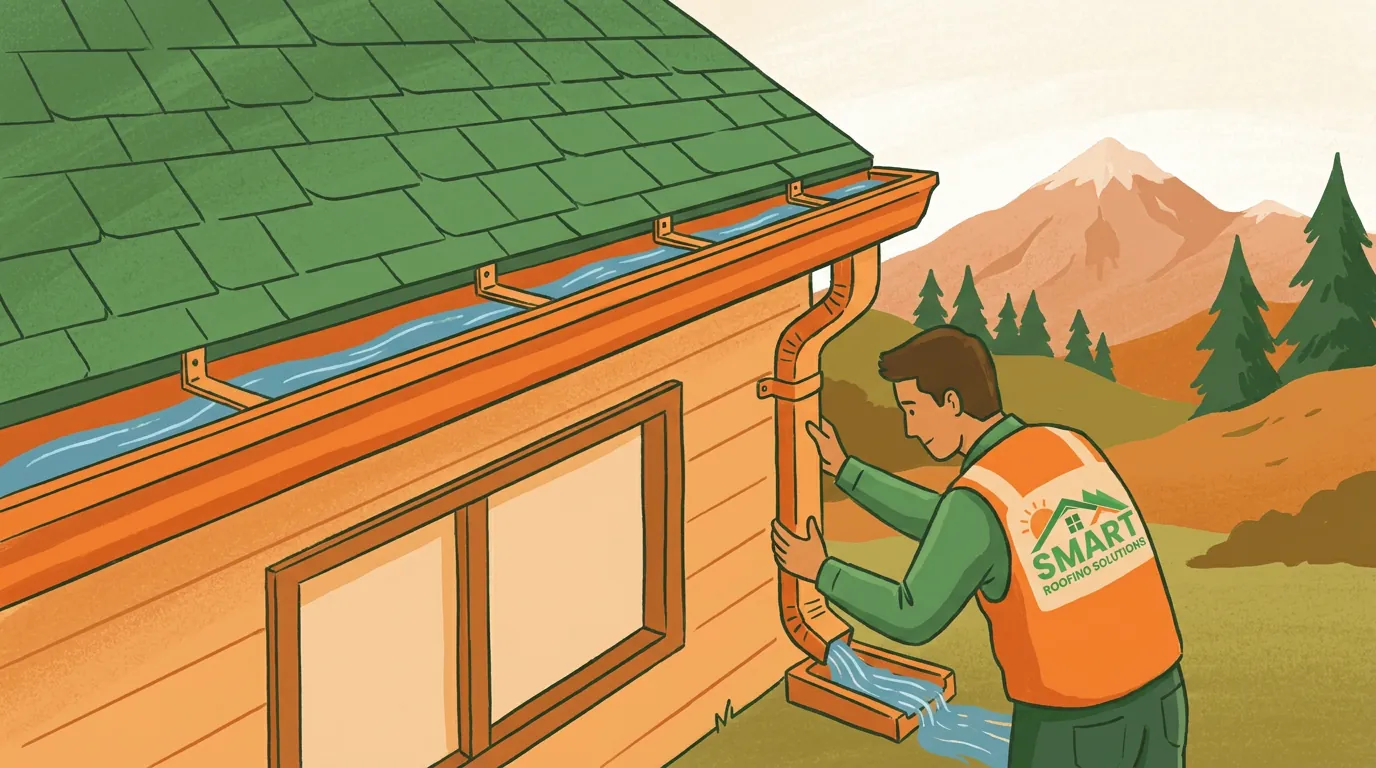
Most homeowners give their gutters little thought until something goes wrong. But in a place like Metro Vancouver, where rain falls for much of the year, the gutter system is one of the hardest-working parts of your home. It is not just a trough along the roof edge; it is a complete system designed to catch every drop that runs off the roof and carry it safely away from your foundation. Understanding how it works makes it far easier to spot problems early and keep your home dry.
What Are the Parts of a Gutter System?
A gutter system is more than the visible trough. Each part has a specific job:
| Part | What it does |
|---|---|
| Gutters (eavestrough) | Catch water running off the roof edge |
| Hangers and brackets | Hold the gutters firmly to the fascia |
| End caps | Close off the ends so water flows toward the outlets |
| Downspouts | Carry water down from the gutters to the ground |
| Elbows | Direct downspout water around corners and away from walls |
| Splash blocks or extensions | Move water out and away from the foundation |
How Does Water Move Through Your Gutters?
The system works as a chain, and the order matters:
- Rain lands on the roof and runs down the slope to the edge
- The gutters catch that water along the eaves
- A slight slope in the gutters guides the water toward the downspout openings
- Downspouts carry the water down to ground level
- Extensions or splash blocks discharge it well away from the foundation
Each step depends on the one before it. If any link fails, the water does not reach the ground where it should.
Why Does Each Part Matter?
It is tempting to think only the gutters do the work, but the supporting parts are just as important:
- The slope - gutters are pitched slightly toward the downspouts; without it, water pools and overflows
- The hangers - if they loosen, the gutter sags, the slope is lost, and water sits
- The downspouts - undersized or clogged downspouts cause backups no matter how clean the gutters are
- The discharge point - water dumped right at the base of the wall defeats the whole purpose
What Are the Common Weak Points?
In our climate, gutter systems tend to fail at predictable spots:
- Clogs from leaves and debris, especially where downspouts meet the gutter
- Sagging from the weight of debris or water on loose hangers
- Leaking seams and joints on older sectional gutters
- Downspouts that discharge too close to the foundation
What Are the Signs Your Gutter System Isn't Working?
Watch for these clues that the chain has broken somewhere:
- Water spilling over the gutter edge during rain
- Streaks or staining on the siding below the gutters
- Pooling water or eroded soil at the base of the foundation
- Gutters visibly sagging or pulling away from the house
- A damp or wet basement after heavy rain
How Do You Keep a Gutter System Working?
Keeping the system healthy is mostly about keeping water moving freely:
- Clear debris from gutters and downspouts, especially in fall
- Check the slope and hangers so the gutters stay properly pitched
- Confirm downspouts discharge well away from the foundation
- Address leaks and sagging before they worsen
Routine gutter cleaning keeps the system flowing, and a well-planned gutter installation gets the slope, sizing, and downspout placement right from the start.
What Does Your Gutter System Protect?
A working gutter system does far more than keep you dry on the way to the door. By controlling where roof runoff goes, it protects several expensive parts of your home:
- The foundation - water directed away prevents pooling that can crack and undermine it
- The basement - proper drainage is one of the best defenses against a wet or flooded basement
- The siding and exterior - water carried away does not streak, stain, or rot the walls
- Landscaping and soil - controlled discharge prevents erosion of garden beds and soil around the home
When the system fails, all of these are exposed to water at once, which is why a clogged or broken gutter is far more than a cosmetic problem.
Why Does This Matter More in Metro Vancouver?
In a drier climate, a marginal gutter system might get by. Here, it cannot. Metro Vancouver receives a great deal of rain over a long wet season, so your gutters handle an enormous volume of water from October through spring. That constant demand means weak points get found quickly, and small problems have months of rain to cause damage. A system that is properly sized, sloped, and maintained for our rainfall is what keeps all that water moving where it should, season after season. It is also why undersized or neglected gutters that might cope elsewhere simply cannot keep up here once the heavy rain sets in.
When Should You Call a Professional?
Some issues are worth expert attention:
- Gutters that sag or pull away from the fascia
- Persistent overflow even after cleaning
- Leaking seams or joints on older gutters
- Water pooling at the foundation despite clear gutters
A gutter repair addresses these before they lead to foundation or siding damage, which costs far more than the gutter work itself.
A System Worth Understanding
Your gutters are a system, and like any system, it is only as strong as its weakest link. Knowing how the parts work together makes it easy to see why a single clog or a sagging section can cause real trouble, and why keeping the whole path clear protects your Metro Vancouver home. Knowing how the parts work together makes it easy to see why a single clog or a sagging section can cause real trouble. If your gutters are not keeping up with the rain, call us at 778-238-3280 or request a free quote.
Frequently Asked Questions
What are the main parts of a gutter system?
How does water move through gutters?
Why do gutters need a slope?
What are the most common gutter problems?
How do I know if my gutter system is failing?
Need Professional Help?
Contact Smart Gutter Solutions for a free consultation and estimate.