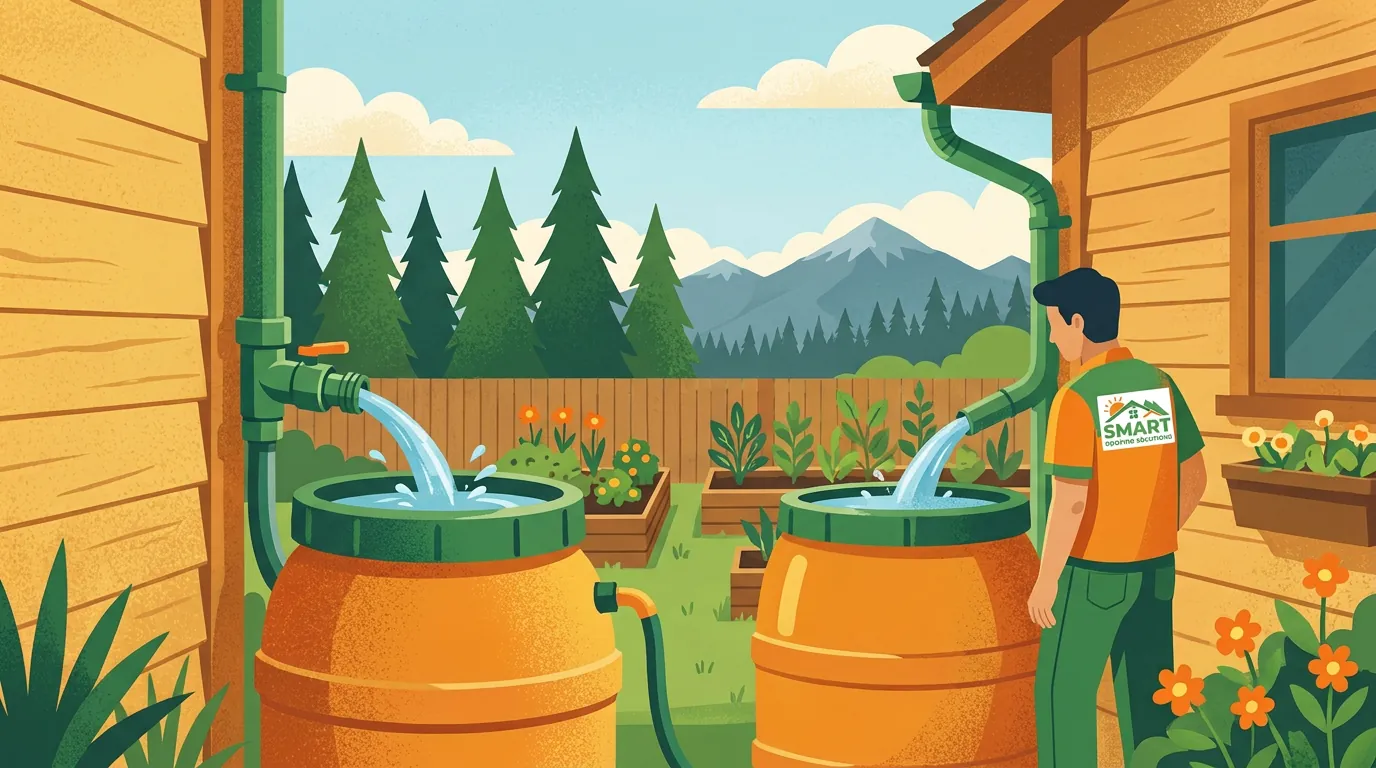
Vancouver has a curious rhythm: it pours through the cooler months and then turns surprisingly dry in mid-summer, just when gardens need water most. Your gutters and downspouts already collect an enormous amount of rain through the wet season, and with a simple addition, you can capture some of it to use later. Rain barrels, connected to your downspouts with a diverter, turn the water your roof sheds into a free supply for the dry weeks ahead.
What Is a Rain Barrel and How Does It Work?
A rain barrel is a container, usually 200 litres or so, that connects to a downspout to collect roof runoff. Rather than letting all that water drain away, the barrel stores it. A tap near the bottom lets you fill a watering can or attach a hose for the garden. The concept is simple: your roof is a large collection surface, and a barrel captures a portion of what runs off it during a rain.
How Does a Downspout Diverter Work?
A diverter is the piece that connects the downspout to the barrel without giving up your drainage. It is installed into the downspout and routes water into the barrel while it has room. When the barrel is full, the diverter sends the rest of the water back down the downspout as usual, so you never lose the normal drainage that protects your foundation. It is the key part that makes a rain barrel safe to add to an existing gutter system.
What Are the Benefits of Harvesting Rainwater?
A rain barrel offers several practical advantages:
- Free water for the garden during summer, when it is needed most
- Lower water use through the dry months, which can ease metered water costs
- A buffer during watering restrictions, which Metro Vancouver often sees in late summer
- Better for plants - rainwater is naturally soft and free of the chlorine and additives in tap water, which many gardeners prefer
- Less runoff entering the storm system during rain, which eases pressure on local drainage
How Do You Set Up a Rain Barrel?
The basic setup is straightforward:
- Choose a spot under a downspout, on firm, level ground (a full barrel is heavy)
- Raise the barrel on blocks or a stand so you can fit a watering can under the tap
- Cut the downspout at the chosen height and fit the diverter
- Connect the diverter to the barrel inlet
- Confirm the overflow path sends excess water safely away from the foundation
Many homeowners handle a basic barrel themselves, while a more permanent setup, or one that ties into the downspout neatly, is worth having done as part of downspout services.
How Much Water Can You Actually Collect?
The numbers are surprising, because a roof is such a large collection surface. Even a modest rainfall produces a lot of runoff, and a single substantial rain can fill a 200-litre barrel from just a section of roof. That is exactly why the overflow handling matters; the barrel fills faster than most people expect. Over a wet Vancouver season, the water crossing your roof is measured in the thousands of litres, so a barrel captures only a fraction, but more than enough for regular garden use through a dry spell.
Where Should You Place a Rain Barrel?
Placement matters for both function and convenience:
- Under a productive downspout that drains a good portion of the roof, so it fills well
- On firm, level ground, since a full barrel is very heavy and must not tip
- Raised on blocks or a stand, so a watering can fits under the tap and gravity gives better flow
- Near the garden you intend to water, to save carrying water across the yard
- Where the overflow can be directed safely away from the foundation
What Should You Watch For?
A rain barrel is low-maintenance, but a few things keep it working well and trouble-free:
- Overflow - make sure the overflow directs water away from the house, not against the foundation
- Mosquitoes - keep the barrel covered or screened so standing water cannot become a breeding spot
- Debris - water from a clean gutter is much better; a clogged gutter sends grit and leaves into the barrel
- Winter - drain and disconnect the barrel before freezing weather so it does not crack, and restore normal downspout flow for the wet season
How Does It Connect to Your Gutter System?
A rain barrel is only as good as the gutters feeding it. Debris washing off the roof and through dirty gutters ends up in the barrel, so keeping the gutters clear with routine gutter cleaning keeps your collected water cleaner. If your downspouts are poorly placed or your gutters are due for replacement, adding a barrel is a natural time to get the whole system right with a proper gutter installation.
Is Rainwater Harvesting Worth It in Vancouver?
Given our climate, it makes a lot of sense. We get plenty of rain to fill barrels through much of the year, and the dry mid-to-late summer is exactly when stored water is most valuable for gardens and when watering restrictions tend to apply. A barrel will not supply your whole household, but for garden and outdoor use it puts the rain your roof already collects to good use. It is a small, satisfying way to make your gutter system do a little more.
Put Your Roof's Rain to Work
Connecting a rain barrel to your downspout is one of the easiest ways to get more value from your gutters. With a diverter to protect your drainage and clean gutters feeding it, you turn winter rain into summer water, and give your downspouts a useful second job in the process. If you would like help setting up or tidying the downspout connection, call us at 778-238-3280 or request a free quote.
Frequently Asked Questions
How does a rain barrel connect to my gutters?
Will a rain barrel affect my home's drainage?
Is rainwater harvesting worth it in Vancouver?
How do I keep my rain barrel from breeding mosquitoes?
Do I need to do anything with my rain barrel in winter?
Need Professional Help?
Contact Smart Gutter Solutions for a free consultation and estimate.